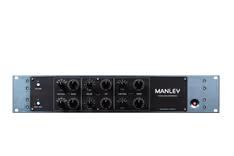
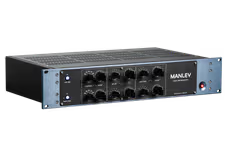
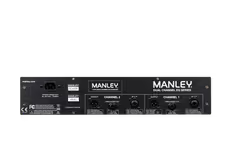
Dual Mid Band EQ

Classic passive topology pushed to maximum impact

  • Manley iron transformers: Adds density, depth, and low-frequency authority beyond what EQ curves alone can achieve
  • Sharp, tight midrange enhancement- great at bringing guitars forward
  • No op-amps, transistors or semiconductors- nothing to sully the character and focus
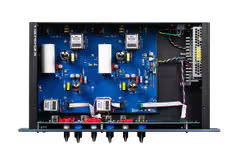
  • Built like it matters: California-built with premium components, satisfying mechanical controls, and a switchmode power supply engineered to outperform traditional linear designs
  • Availability: U.S. dealers now, worldwide from August 4

MSRP:$5,499

Image
Image
Image

Natural Curves and Phase-Coherent Behavior

Passive inductor networks designed to create tonal changes that remain integrated to the source. Overlapping curves and the unique ability to cut AND boost allows musical and wide ranging tone shaping options. Large moves do not automatically sound heavy-handed, and small moves can change the perspective of a mix without calling attention to the tool. The result is equalization that preserves depth, transient behavior, and musical continuity rather than pulling the sound apart.

Image

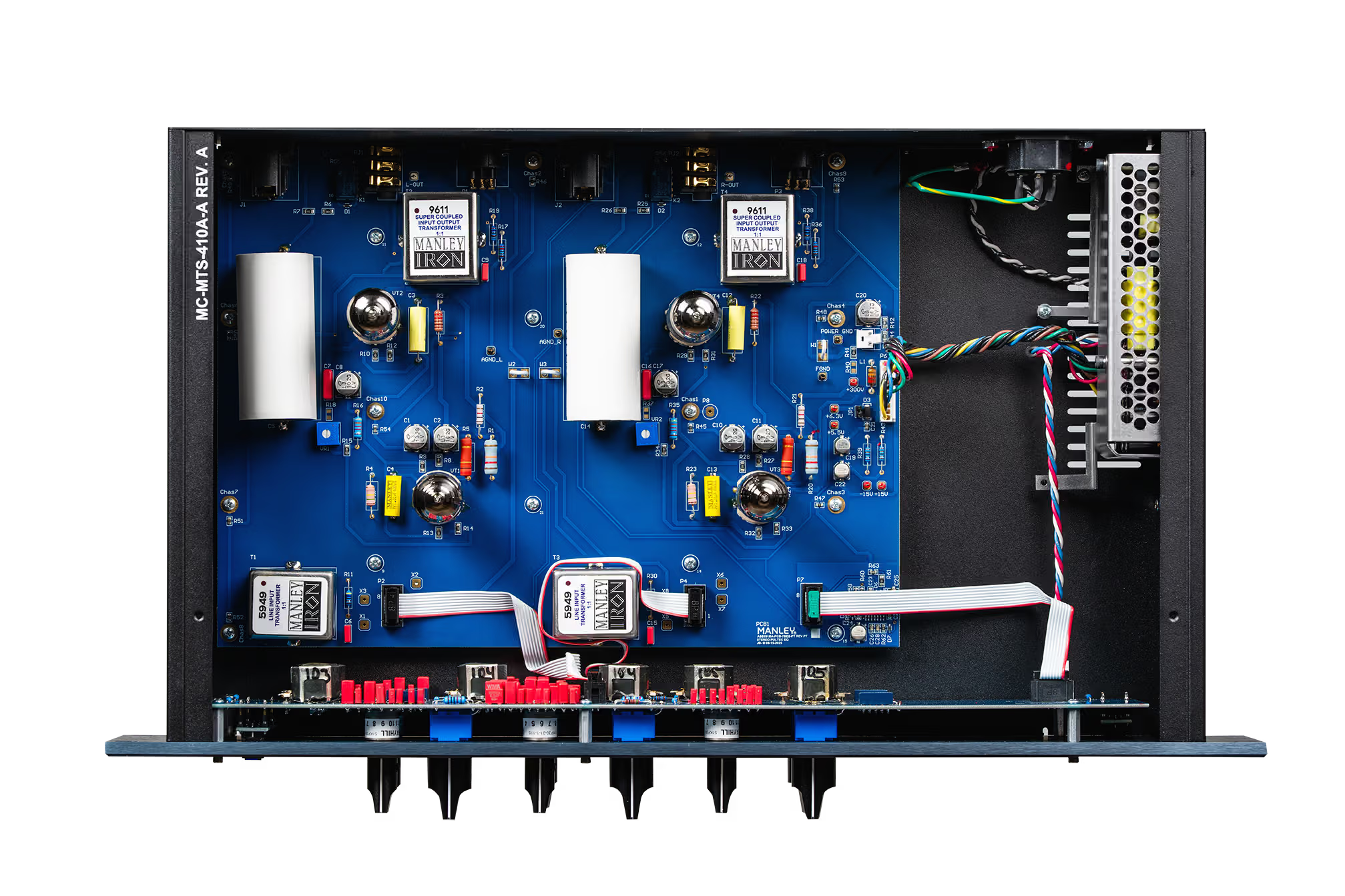
All Tube Signal Path

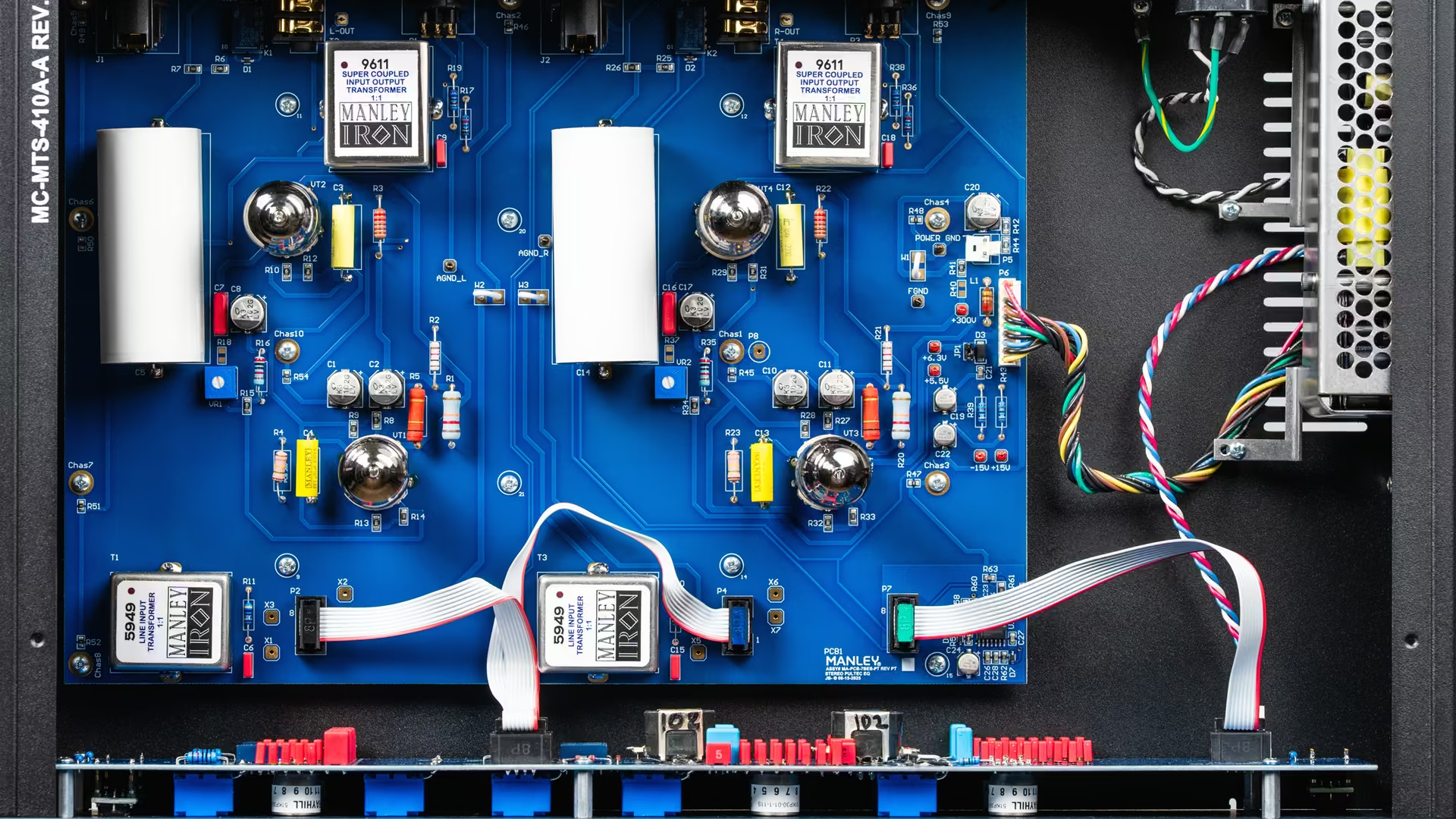
Passive EQ networks lose level by design. Restoring that level is central to their sound. The Dual Series uses Manley tube makeup gain stages that benefit from decades of experience and experimentation building high-end tube equipment for the most discerning ears. It’s core to the dimensionality, harmonic structure, and authority of the sound.

Image

Precision Stereo Architecture

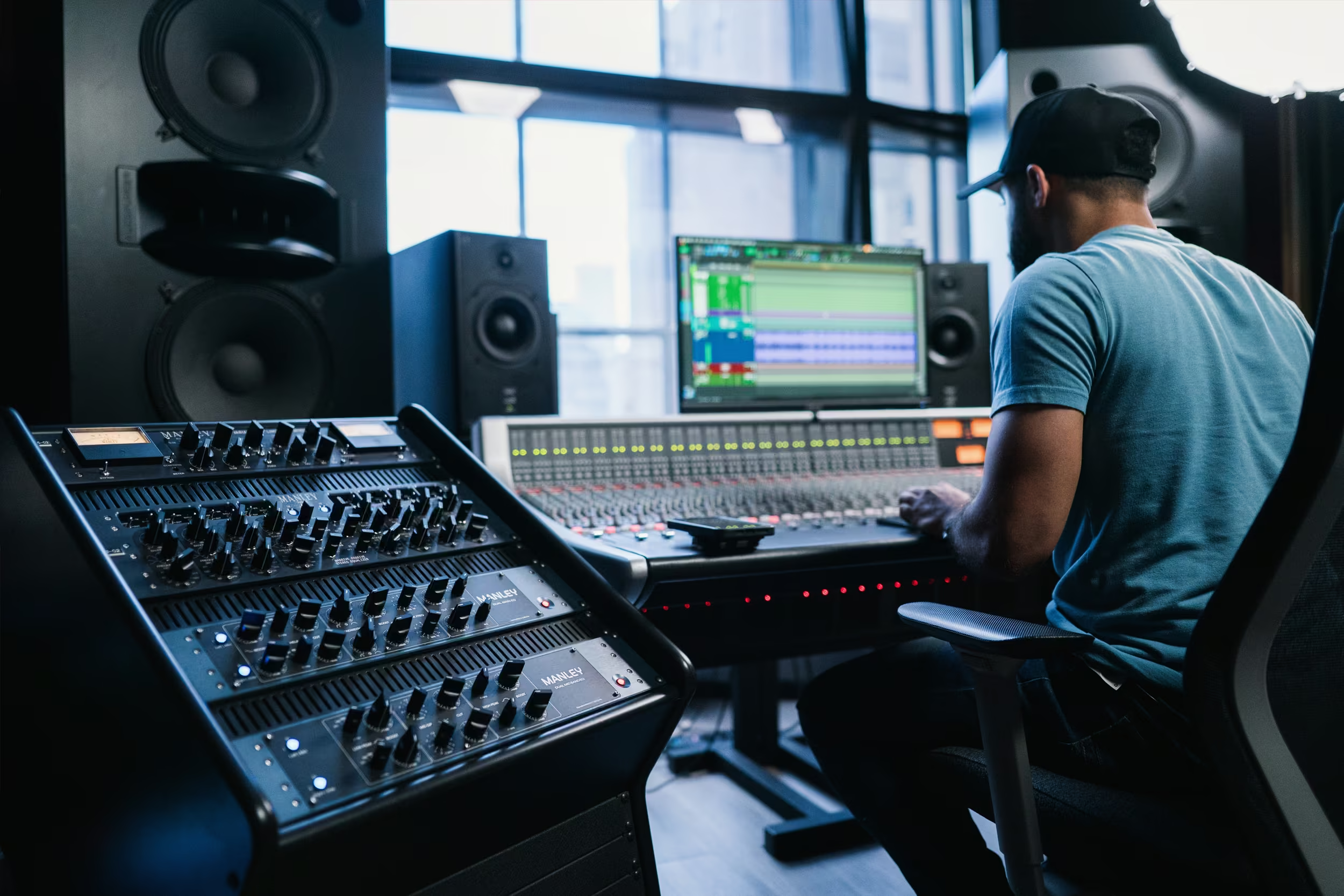
True dual-channel design with matched channels expands use beyond just tracking tasks and creates a perfect match for instrument buses, mix buses, mastering, and Mid/Side workflows.

Image

Bandwidth

10 Hz - 70 kHz

Frequency Response


THD / Noise

<0.01%

Dynamic Range


Max Output

+30 dBu

Headroom


Signal to Noise Ratio

89 dB


Specifications

  • Passive inductor-based equalization — broad, natural, phase-coherent curves
  • High-voltage all-tube signal path — 5751 input stage, 12BH7 output stage
  • Custom in-house wound Manley Iron transformers on input and output
  • True stereo dual-channel operation — Left/Right or Mid/Side compatible (no internal matrix included)
  • Frequency response: flat within ±0.1 dB from 20 Hz–22 kHz
  • Total response: 10 Hz–70 kHz
  • Output exceeding +30 dBu  -  26 dB headroom referenced to +4 dBu
  • THD / Noise: <0.01%
  • Designed for mix-bus, mastering, tracking, and stem processing
  • Universal switchmode power supply — compatible with all mains voltages, contributes to extended headroom and low noise floor
  • 2U rackmount — 3.5" × 19" × 7"  ·  11 lbs
  • Handcrafted in California, USA
  • Classic Low Shelf Bloom- for super fat thick and tight low end.
    Enhanced Frequency Options- More choices to better suit whatever you work.
    Airy, open top end- Smooth, natural and full of character

Frequently Asked Questions about the Massive Passive

No. The Dual Series does not include an internal Mid/Side encoder or decoder matrix.


The front-panel labels simply acknowledge that the unit can be used in either traditional Left/Right stereo operation or as part of an external Mid/Side processing chain. When fed Mid and Side signals from an external encoder, the two channels can be adjusted independently, allowing separate equalization of the Mid and Side components of a stereo signal.
 

This approach provides maximum flexibility, allowing the Dual Series to integrate with the wide variety of Mid/Side workflows already found in professional studios. Users wishing to perform Mid/Side processing will need an external encoder/decoder, either in hardware or within their DAW.


In standard operation, simply connect and use the unit as a conventional stereo or dual-mono equalizer.

 

The Dual Series employs passive filter networks where multiple controls share portions of the same electrical circuit. As a result, a change to one parameter can alter the loading conditions experienced by another section of the EQ.


This means that controls such as bandwidth, frequency selection, boost, and attenuation should not always be viewed as independent variables. For example, narrowing a bandwidth may increase the apparent intensity of a boost, while changing frequency selections can subtly alter how adjacent filters combine. The final response is the result of all selected settings working together.


The resulting curves often sound more natural and integrated than the sum of a series of isolated EQ moves, encouraging adjustment by ear rather than by specification alone.
 

The switchmode power supply is universal and compatible with all mains voltages worldwide. No voltage selection or modification needed. Only the appropriate cabling to the wall needs any adapting.

Couldn't find the answer you're looking for?

Check out our Help Center

Your Shopping Basket

Your cart is empty

Add items to get started

Subtotal (0 items)$0

You can choose between: Cash Buy, Rent-to-Own, and Finance.
Shipping and discounts will be calculated at checkout.

Manley × Audio.Store