
The ELOP+ utilizes electro-optical gain reduction, wherein a light-dependent resistor functions as a voltage-controlled attenuator in the audio path. This topology achieves smooth, artifact-free compression without the complex harmonic products characteristic of other gain reduction methods. The inherent attack and release characteristics produce musical dynamic control that integrates naturally, even into busy arrangements.



ELOP®+
All-Tube Electro-Optical Dynamics
- Improved version of the original, acclaimed ELOP Limiter
- All-tube, electro-optical topology for musical gain reduction
- Dual-ratio operation: 10:1 Limiter and 3:1 Compressor modes
- Hand-assembled in California

Manley ELOP®+ Electro-Optical Compressor Limiter
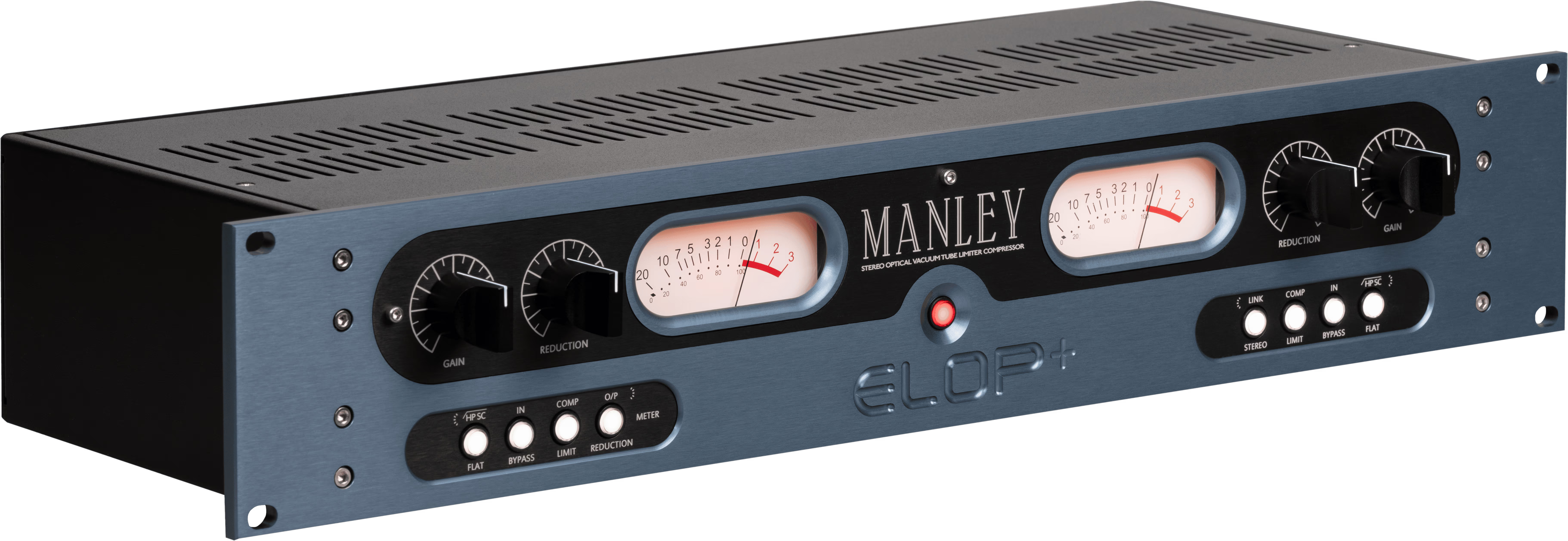
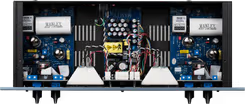
The Manley ELOP®+ represents a comprehensive re-engineering of the legendary ELOP Limiter, advancing the all-tube, electro-optical design with added versatility and performance. Hand-built in California, it employs light-dependent (optical) resistor technology with vacuum tube amplification throughout the signal path, to deliver musical, transparent and dynamic control for tracking and mixing sessions.
Enhanced functionality with dual-ratio operation
Building upon the original design, the ELOP+ incorporates switchable 3:1 compression ratio alongside the classic 10:1 limiting mode, to offer mix buss processing and gentle dynamic shaping. A high-pass side-chain filter allows frequency-selective triggering, preventing low-frequency content from pumping. It's a simple box offering great results easily!
California craftsmanship with premium tube complement
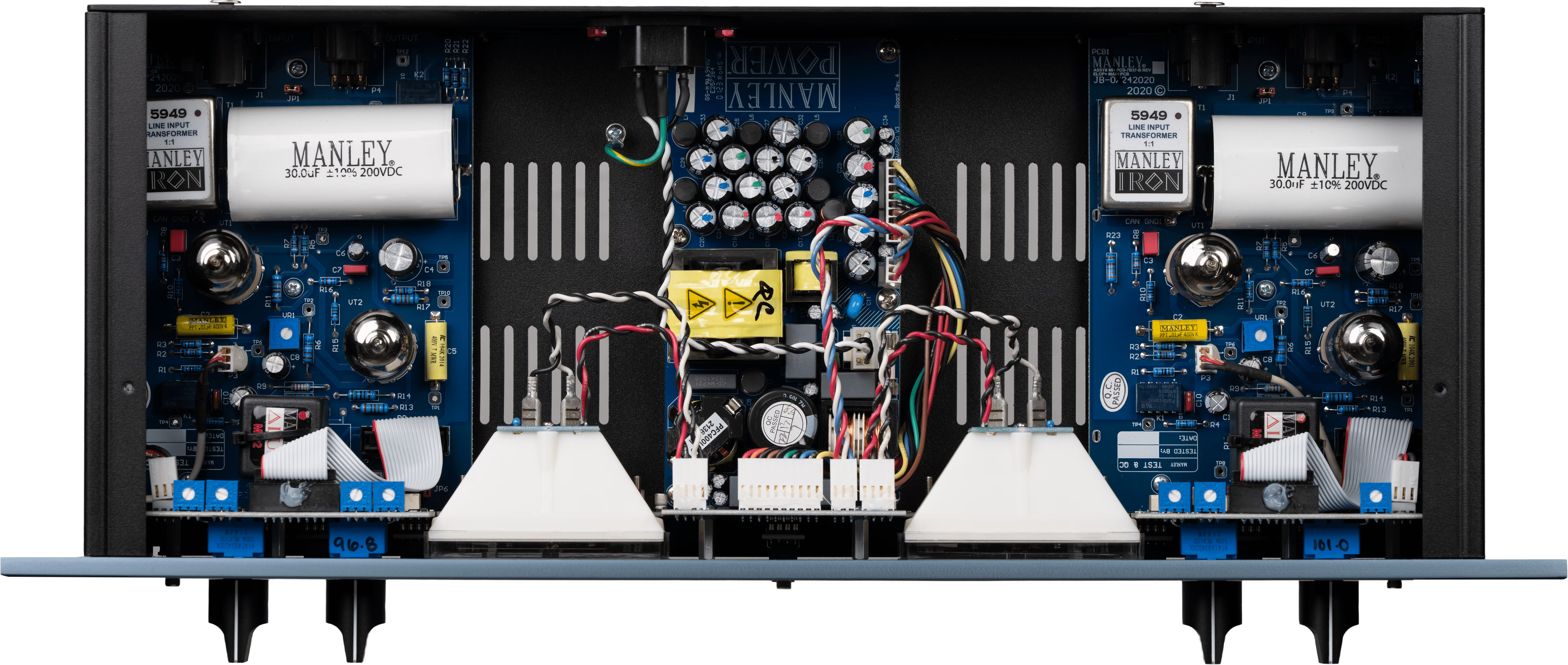
Each ELOP+ is hand-assembled at Manley's California facility using 5751 and 6922 dual triode vacuum tubes throughout the signal path. Housed in a precision CNC-milled chassis, the ELOP+ combines proven electro-optical topology with modern construction standards. This integration of classic circuit design and contemporary manufacturing delivers reliable performance and sonic consistency for professional studio environments.
Ratios
10:1 (Limiter), 3:1 (Compressor)
Tubes
5751, 6922 dual triodes
one each per channel
Max Gain Reduction
22 dB
Dynamic Range
118 dB
THD+N
0.004 %
Frequency Response
10 Hz – 70 kHz ±0.5 dB
Power Supply
Universal 90-254 VAC
Specifications
- 10:1 Limiter and 3:1 Compressor ratios
- All-tube audio path uses 5751 (gain) and 6922 (White Follower Output) dual triodes each channel
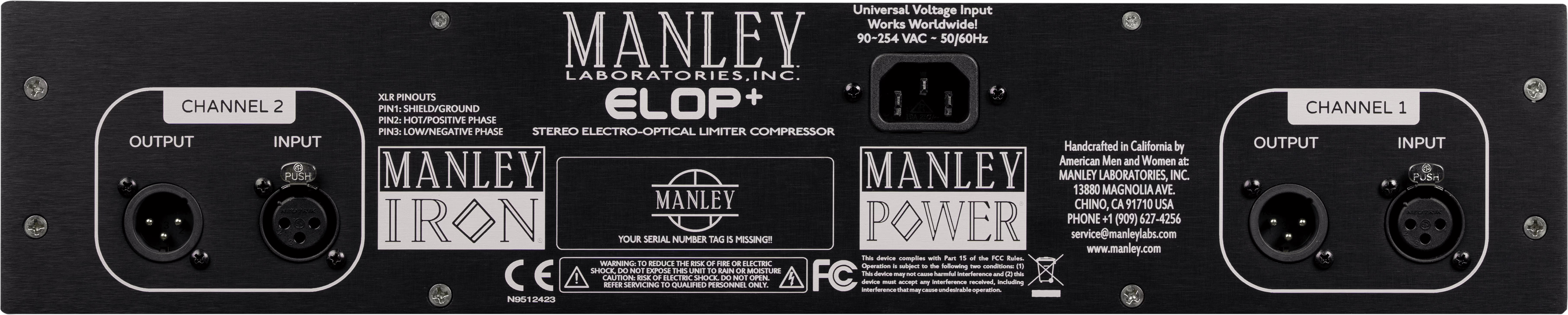
- Balanced Manley IRON® transformer-coupled XLR Inputs
- XLR impedance-balanced outputs
- BYPASS switches and AUTOMUTE with warm-up delay
- Large illuminated VU meters read Gain Reduction or Output levels
- STEREO LINK
- Side-Chain High-Pass Filter
- Standby Power Consumption: 0.5 Watts
- Universal internal power supply operates worldwide 90-250V~AC 50/60Hz
- ALL-TUBE audio path using a 5751 for gain, 6922 White Follower output tube (one each per channel)
- Silent Conductive Plastic GAIN control.
- Balanced MANLEY IRON Transformer coupled XLR input.
- Input impedance: 14 kOhms
- Maximum input level: +18dBu or 4.8V RMS @ 0.01% THD
- Hi-current White Follower Impedance Balanced XLR output.
- Output impedance=150 Ohms
- Maximum Output with 100 kOhm load= +30dBu @.009%THD+N, BW 22Hz-22Khz, 1Khz sine
- Maximum Output with 600 Ohm load= +20dBu @.015%THD+N, BW 22Hz-22Khz, 1Khz sine
- Output Headroom (Referenced to +4dBu)= 26dB
- Frequency Response= -0.15dB @ 10Hz, -0.1dB @ 20KHz
- Total Harmonic Distortion (1kHz sine @ +4dBu, BW 22Hz-22kHz) = 0.004 % THD+N
- Noise Floor Limiter Bypass= -90dBu (BW 22Hz-22kHz)
- Noise Floor Limiter Engaged= -88dBu (BW 22Hz-22kHz) Input set to Unity gain
- Dynamic Range= 118dB
- Signal to Noise Ratio = 92dB (Referenced to +4dBu)
- Bypass mode = Signal goes thru ALL-TUBE audio path (Bypasses limiter) this is not a “hardwire bypass”
- Unity Gain= Set Input Attenuator @ 1:00 o’clock
- Maximum Gain= 13 dB
- Common-Mode Rejection Ratio (CMRR)= 77dB (BW 22Hz-22Khz, +4dBu, 1Khz sine)
- Limiter Ratio= 10:1
- Compressor Ratio= 3:1
- Limiter: Attack= 15ms
- Limiter Release= 200ms
- Compressor: Attack= 75ms Release= 200ms
- Attack/Release times measured under following conditions: 4dB of Gain Reduction, 1kHz sine, +4dbu Input level, to 63% of total.
- Attack times are faster with higher input levels and heavier gain reduction. Typically for complete release, release times increases up to a couple of seconds, depending upon the amount of previous reduction.
- Maximum Limiting (with +4dBu 1Khz sine)= 12dB
- Maximum Compression (with +4dBu 1Khz sine)= 6dB
- Side-Chain High Pass Filter= 80Hz (Internal user adjust jumper to 150Hz)
- Automute warmup delay=30 seconds
- Operating mains voltage= 90 to 254 VAC (internal universal power supply)
- Mains voltage Frequency= 50-60 Hz
- Power consumption= 26 Watts
- Dimensions= (w,d,h) 19" x 7 x 3 1⁄2" (occupies 2u)
- Unit weight= 9.5 Ib
- Shipping weight= 10 Ib
Frequently Asked Questions
The ELOP+ is distinguished by its unique, fully Class-A, all-tube signal path from input to output.
The new "Compress" mode on the ELOP+ is designed for subtler, more transparent gain reduction. With a gentle 3:1 ratio, this mode is ideal for adding "glue" and consistency to a full mix or sub-group without over-compressing. It's perfect for applications like bus compression on drums or vocals, where you want to increase the average loudness and density of a signal while preserving its natural dynamics and transient detail.
The ELOP+ is a versatile tool for both tracking and mixing.
The side-chain high-pass filter (HPF) on the ELOP+ prevents the compressor from "pumping" or over-reacting to bass frequencies.
The ELOP+ features a meticulously selected all-tube audio path.
Yes, the ELOP+ is a fantastic tool for mastering. Its new "Compress" mode with the 3:1 ratio provides the subtle, musical gain reduction that mastering engineers often seek. Its extremely low distortion and noise, combined with an all-tube signal path, allow it to add a rich, analog character and a gentle sense of "glue" to a stereo mix without compromising its integrity. The HPF side-chain is also a key feature for mastering, as it helps to maintain a punchy low end while controlling the overall dynamics of a track.
Couldn't find the answer you're looking for?
Check out our Help Center
